How to choose an AI voice agent platform
Choose a voice-agent platform with a realistic call trial. Compare integrations, interruptions, transfers, data handling, and the complete cost of each setup.
On this page
Choose a voice-agent platform by running your actual call workflow on a short list of candidates. The deciding factors are whether it handles the conversation, reaches your business systems, transfers safely, and meets your operating and data requirements.
A natural-sounding sample call is useful, but it cannot answer those questions. We would define the call's success conditions before choosing the provider.
TL;DR Test the same real call scenarios on each platform. Verify bookings and transfers, review data handling, and compare the full cost of the setup you would run.
Start with a call you need to handle
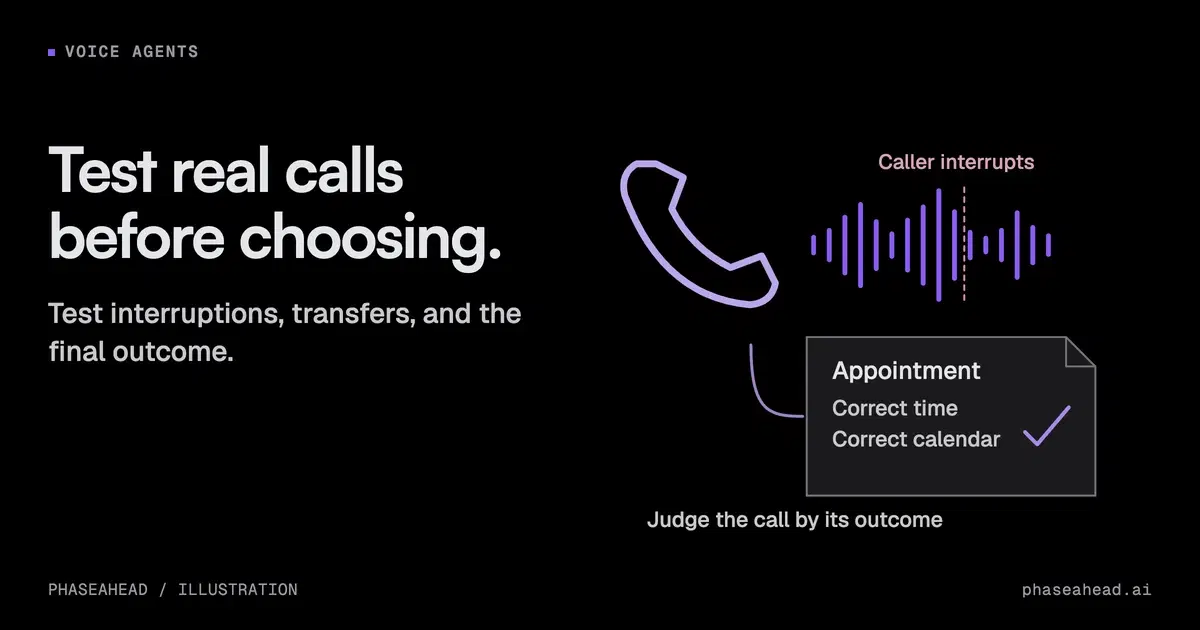
For appointment scheduling, success means a valid booking in the correct calendar. For an order-status line, it means an authorized answer about the correct order. For urgent requests, success may mean reaching a person immediately.
List required languages, operating hours, how many simultaneous calls you expect, phone numbers, and integrations. Record when the agent must stop answering and transfer. Check what happens outside staffed hours, because a transfer to an unanswered phone is not a complete fallback.
Use these requirements to eliminate unsuitable platforms before comparing voice quality.
Compare what your team will need to run
| Candidate | Why consider it | What to verify directly |
|---|---|---|
| Vapi | Configurable provider stack and developer integration | Provider charges, deployment controls, and operational effort |
| Retell | Managed voice-agent workflow | Selected model and voice costs, integrations, and transfer behavior |
| ElevenLabs Agents | Voice capabilities with a full agent platform | Workflow support, telephony, model billing, and plan limits |
| Other managed or contact-center products | Existing support environment or procurement requirements | Integration fit, contractual scope, and exit options |
This is a starting shortlist, not a ranking. A no-code interface can reduce setup effort but does not remove the need to test permissions, booking logic, and failures.
The official Vapi, Retell, and ElevenLabs pages describe different pricing structures. Read the current configuration and contract rather than assigning every product the same "bring your own keys" label.
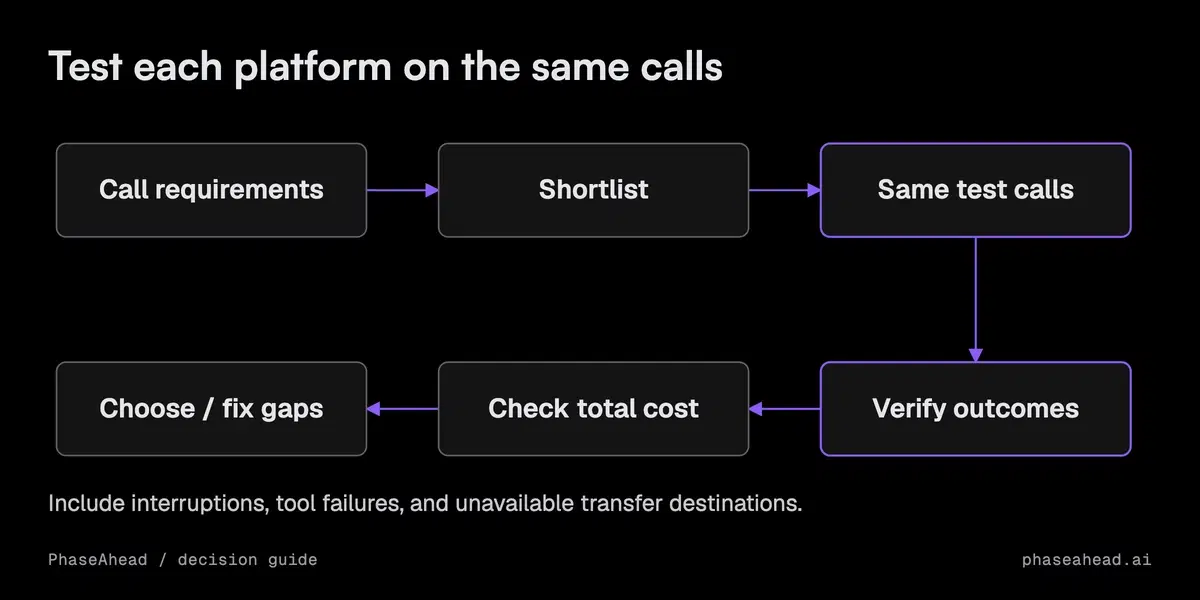
Run the same difficult calls on every candidate
Use the same scripts and business data. Include an interruption, a correction halfway through a booking, background noise, an unavailable appointment, and a tool timeout. Test relevant accents and languages with appropriate speakers.
Measure time to a useful reply, including slower calls. A median alone can hide long pauses. Distinguish model response time from the full caller experience, which also includes speech detection, audio generation, tools, and the network.
Listen for whether the agent stops speaking when interrupted and retains the caller's correction. Verify the final record in the business system. A convincing verbal confirmation is not proof of a booking.
Review transfers and data handling before launch
Check whether a transfer carries the useful context, whether the caller knows what is happening, and what happens if the destination is unavailable. Keep an alternative for callers who cannot or do not want to continue with the agent.
Map where audio, transcripts, account information, and logs travel. Confirm retention, deletion, access controls, and permitted regions for the selected services. Where health information is involved, check applicable business-associate and subprocessor arrangements with the responsible legal or compliance owner.
SOC 2 reports and vendor compliance pages are evidence to review, not a blanket approval for your use case. Recording and outbound-calling requirements also depend on where and how the service operates.
Compare the complete bill and the exit
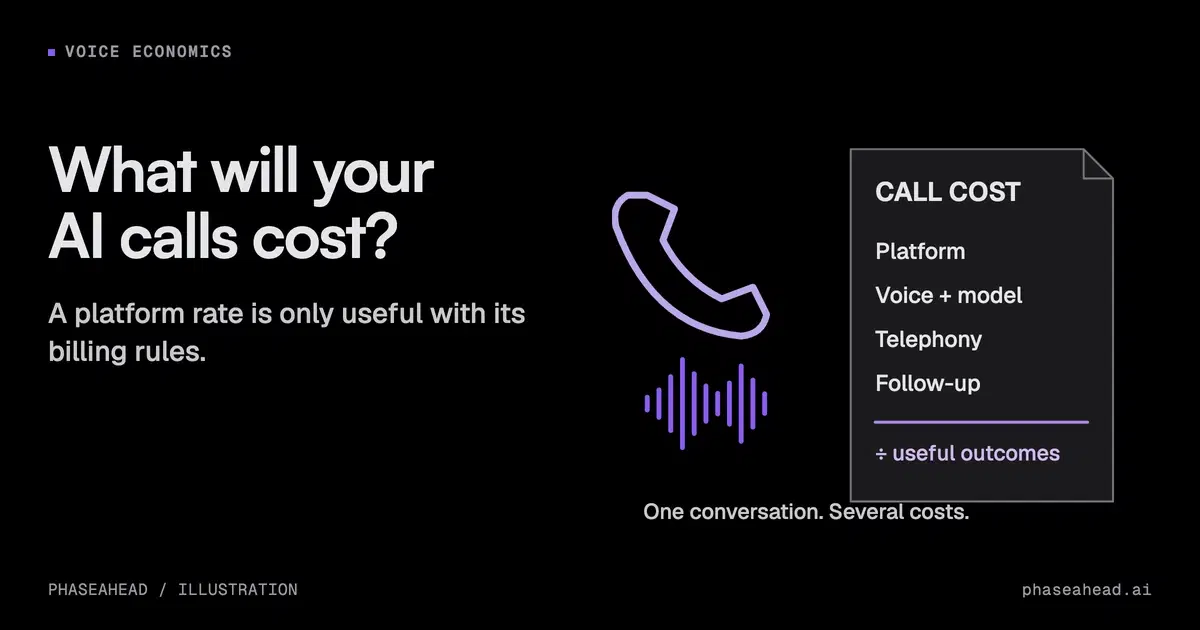
Price the tested configuration: platform, models, audio, telephony, numbers, transfer legs, add-ons, and support. Avoid adding a component twice when the plan already includes it. The voice-cost guide separates those billing units.
Ask what you can export: prompts, call records, configuration, phone numbers, and integration code. Then identify what would have to be rebuilt when switching.
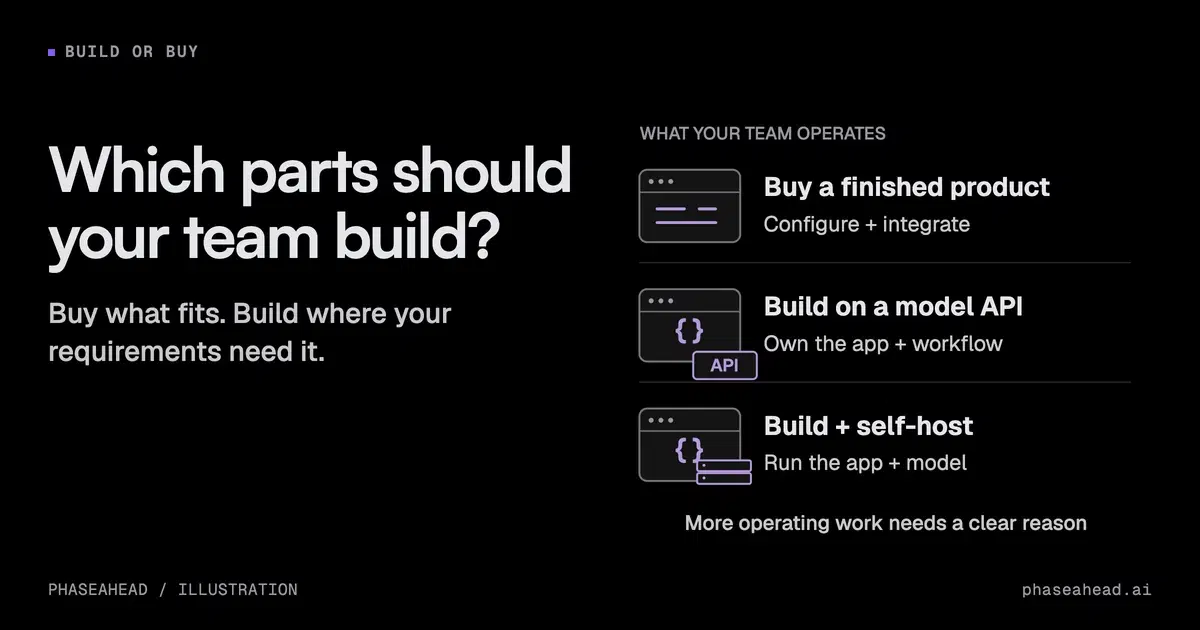
Build your own call-handling system only when a specific requirement or measured saving justifies running it. A managed platform can still support custom business logic. That distinction is part of the broader build-or-buy decision.
Bring the call results, a cost estimate for the setup you tested, and any requirements it still cannot meet to the selection meeting. That gives the team evidence for choosing a platform and a concrete list of conditions to satisfy before rollout.

Sources
- Vapi: Pricing and included features
- Retell: Pricing and configuration
- ElevenLabs: Agents pricing
Common questions
Is Retell or Vapi better for our business?
Is Retell or Vapi better for our business?
Shortlist them against your call workflow, integration needs, and operating capacity. Compare the same call scenarios and configuration instead of relying on headline rates or a competitor's comparison.
Is ElevenLabs only a voice provider?
Is ElevenLabs only a voice provider?
No. It offers voice technology and an Agents platform. Evaluate its complete platform when it meets your requirements, rather than treating it only as a component inside another vendor.
How should we compare voice-agent latency?
How should we compare voice-agent latency?
Measure from the caller finishing a turn to the agent starting a useful reply, across realistic calls. Include slow cases, interruptions, tool calls, and transfer behavior.
Does a HIPAA claim cover our deployment?
Does a HIPAA claim cover our deployment?
Not by itself. Check the data flow, enabled services, contract terms, and business-associate arrangements that apply to your configuration.