How to get a vibe-coded app ready for customers
Check access, backups, deployment, monitoring, and running costs before launching a vibe-coded app, then fix the gaps that could affect customers.
On this page
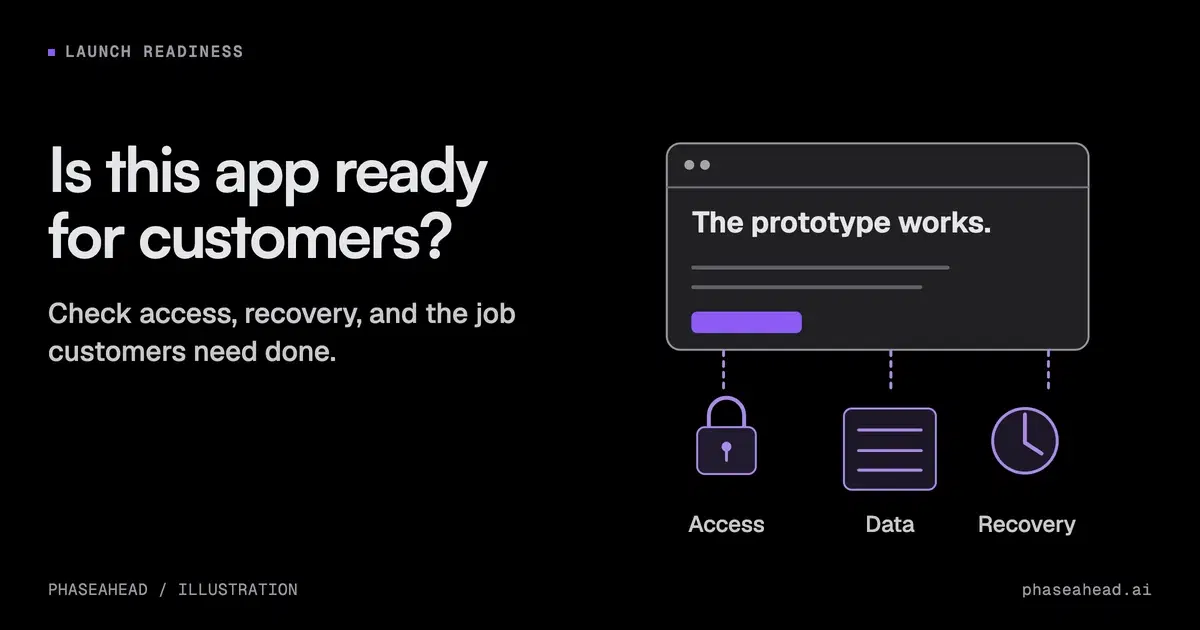
A working prototype shows that the basic idea can work. To put it in front of customers, you also need evidence that it protects their data, completes important tasks, and can recover when something fails.
We would check access, task completion, and recovery before deciding on a rewrite. Some prototypes can be improved one part at a time. Others need a larger change because important rules are scattered or the deployed system cannot be reproduced. The decision should follow the code and requirements, not the fact that AI helped write it.
TL;DR A prototype does not automatically need a rewrite. Check the customer workflow, permissions, recovery, monitoring, and running cost. Fix the gaps that prevent a safe launch.
Trace the critical customer journey
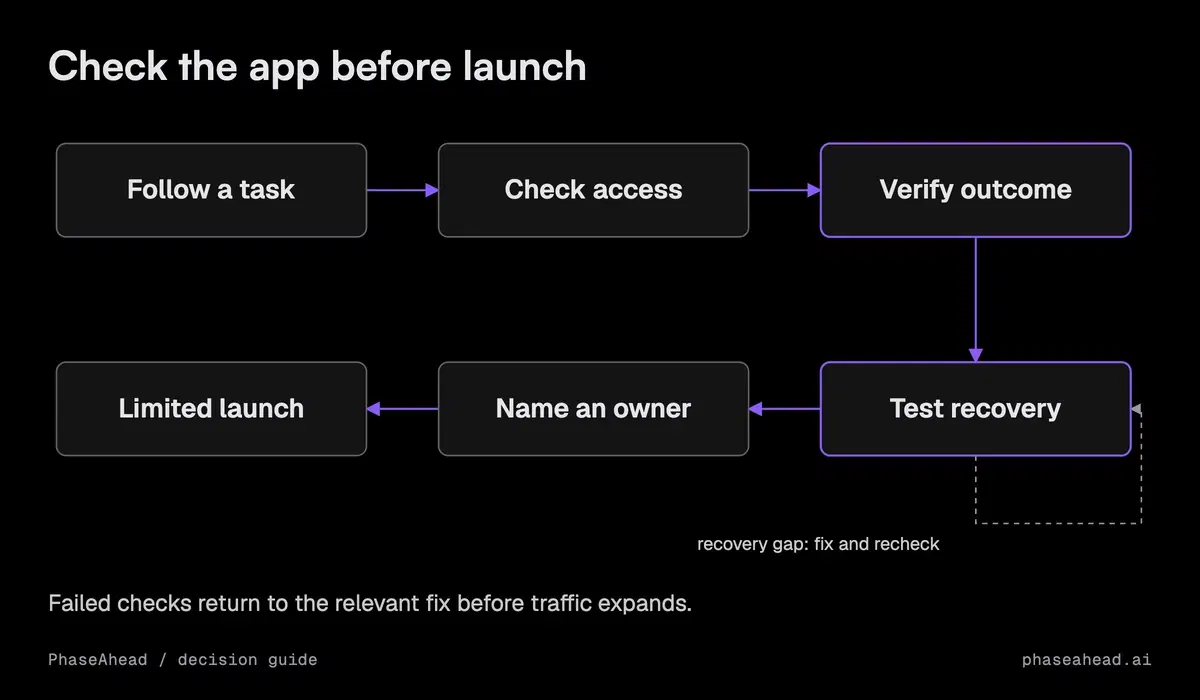
Choose the workflow that matters most: signing up, uploading a file, paying, receiving a result, or booking an appointment. Follow it through the browser, server, database, and external services.
Write down the expected result and how you verify it. Include failures between steps. If a payment succeeds but the app loses the response, what prevents another charge and how does the customer receive access?
That trace becomes the basis for the release review. It also exposes unnecessary complexity more clearly than a general request to "clean up the code."
Verify identity and data isolation
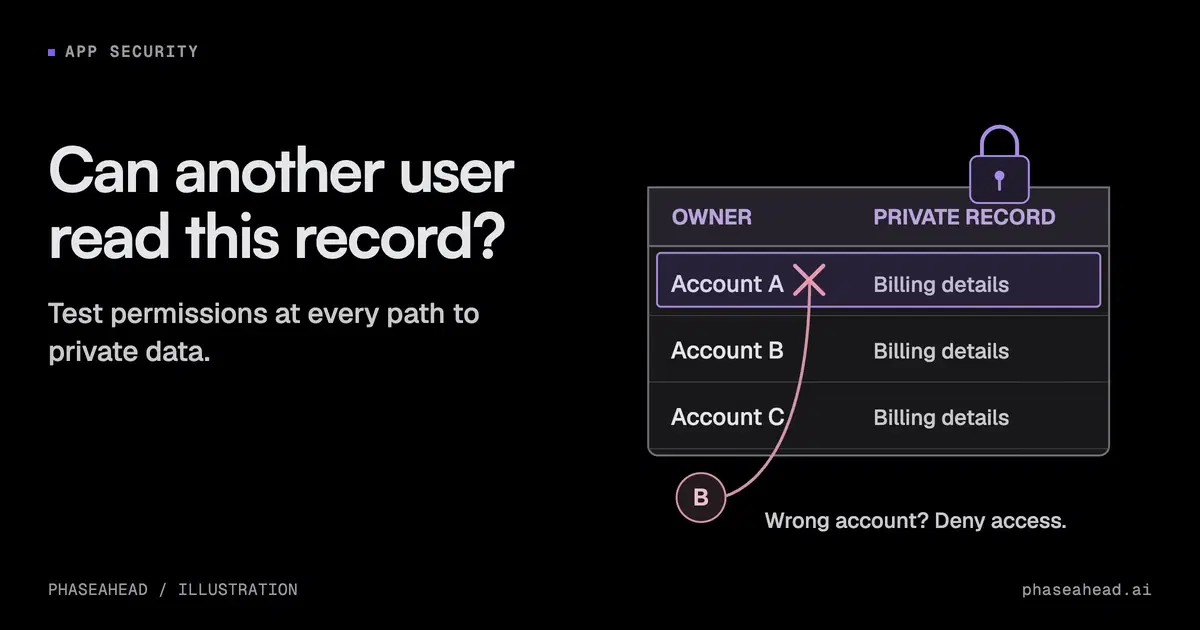
Test the journey as the intended user, another user, and an unauthenticated caller. Check API requests directly, not just which controls the interface displays.
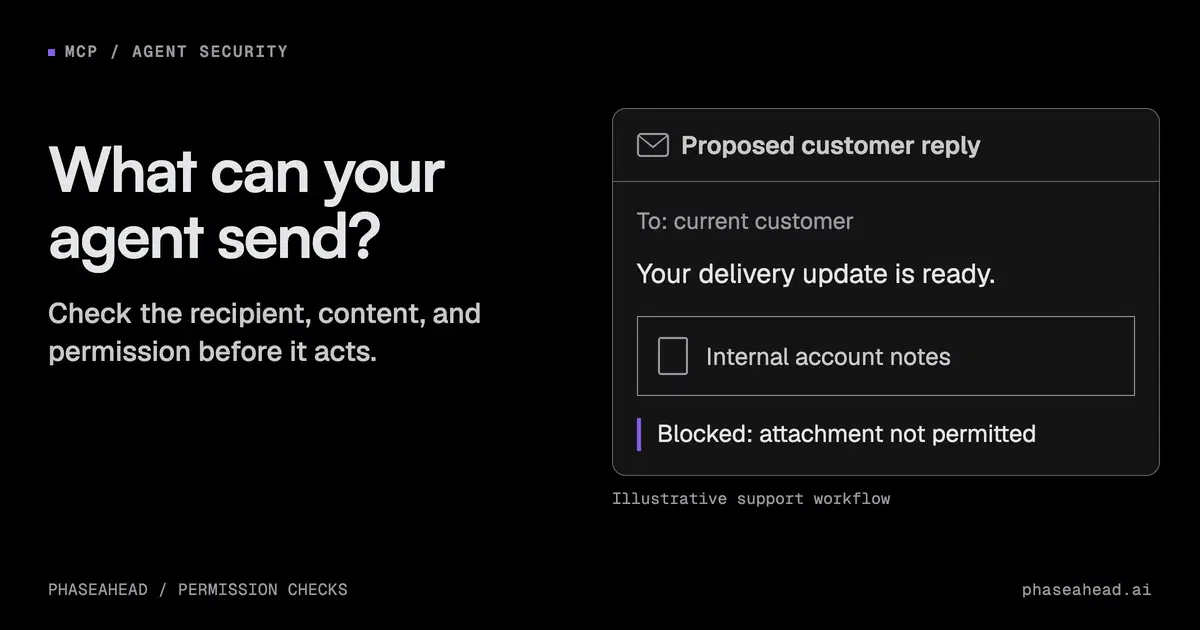
Confirm that privileged credentials remain server-side and that server actions enforce authorization. For Supabase, review grants and policies using the official RLS guidance.
The security review covers those checks in more detail. A visually complete app should not proceed with a way for one customer to access another customer's private data.
Make deployment and recovery repeatable
The repository should contain the application and the definitions needed to build it. Document required configuration without committing secrets. Use a lockfile and controlled dependency updates so another person can reproduce the build.
Review database migrations against existing data. A new application version and a schema change may not roll back together. Decide how to recover before applying destructive changes.
Restore a backup into an isolated environment and verify that the application can use it. Include uploaded files and other required stores, not only the main database. Define how to reconcile actions that happened after the backup or during an interrupted workflow.
Track completed tasks as well as errors
Track failed requests, latency, and availability. Also track whether the customer completed the intended job. A successful HTTP response can still contain an unusable result.
For AI behavior, build representative evaluations and review important failure categories. OpenAI's evaluation guidance recommends task-specific and ongoing evaluation. Anthropic's agent guidance reinforces the value of simple workflows and clear tool boundaries.
Keep traces useful without logging unnecessary personal data. Name an owner for alerts and give that person a tested way to stop risky actions or divert work.
Estimate the running cost before launch
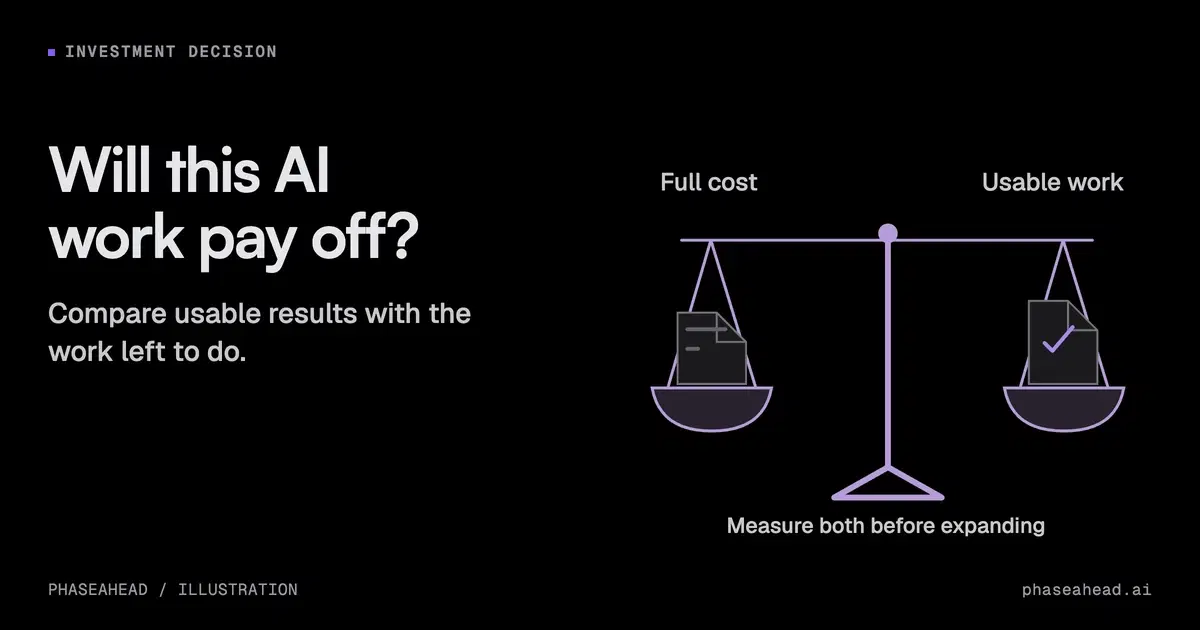
Measure the complete workflow, including retries, storage, background jobs, external tools, and human follow-up. Convert rates carefully and keep the expected request frequency explicit.
Do not derive a monthly budget from registered users alone. Use active usage and the distribution of tasks. Put limits around expensive operations and test what customers experience when a limit is reached. The AI cost guide provides the accounting structure.
Turn findings into a release decision
| Boundary | Evidence to bring |
|---|---|
| Access | Expected permissions work; cross-user attempts fail |
| Core workflow | Correct external outcome, including retry cases |
| Deployment | Reproducible build and reviewed migration path |
| Recovery | A completed restore and reconciliation exercise |
| Operations | Useful alerts, an owner, and a fallback |
| Economics | Measured usage and an explained cost forecast |
Fix issues in related batches, then verify the affected workflows. Avoid a broad rewrite unless the review shows that the current structure makes those requirements impractical to meet.
Launch to a restricted audience with clear support and rollback arrangements. Expand after the evidence supports the next level of usage. Start with one launch requirement you have not checked, such as restoring a backup, and demonstrate that it works.

Sources
- Supabase: Row-level security
- OpenAI: Evaluation best practices
- Anthropic: Building effective agents
Common questions
Does a vibe-coded prototype need a rewrite?
Does a vibe-coded prototype need a rewrite?
Not automatically. Inspect the code and deployment against the product's requirements. Keep working parts and replace or refactor boundaries that cannot be tested or operated safely.
What should block a production launch?
What should block a production launch?
Unresolved failures affecting private data, money, core task completion, or recoverability should be assessed against explicit release criteria. A working interface alone is insufficient.
What is the difference between a backup and recovery?
What is the difference between a backup and recovery?
A backup is stored data. Recovery is a demonstrated process for restoring usable service and reconciling any work lost or interrupted since that backup.
Do AI-generated apps need different reliability standards?
Do AI-generated apps need different reliability standards?
The requirements follow the product's data, users, and consequences. Generated code still needs the same verified permissions, deployment, monitoring, and recovery expected of other code.